Challah on an open fire: Shavei Israel emissaries share stories of the Igbo Jews of Nigeria
Abuja, the capital of Nigeria, sprawls over 275 square kilometers. A planned city that replaced Lagos as the country’s center of government in the 1980s, Abuja and its metropolitan area have close to three million residents who live either in the city’s relatively wealthy central core or one of five main suburban areas. In addition, a number of hardscrabble neighborhoods have sprouted up on the city’s outskirts – that’s where some of the estimated 2,000-3,500 Igbo Jews of Nigeria live.
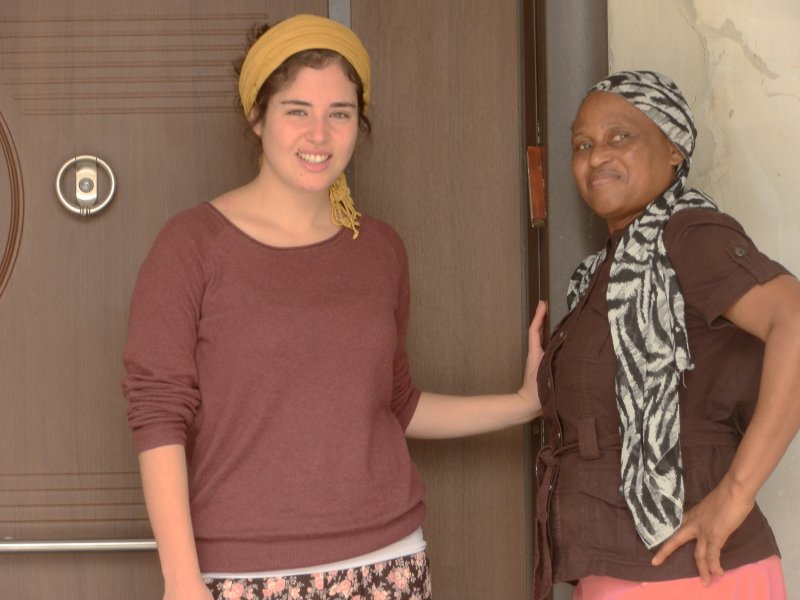
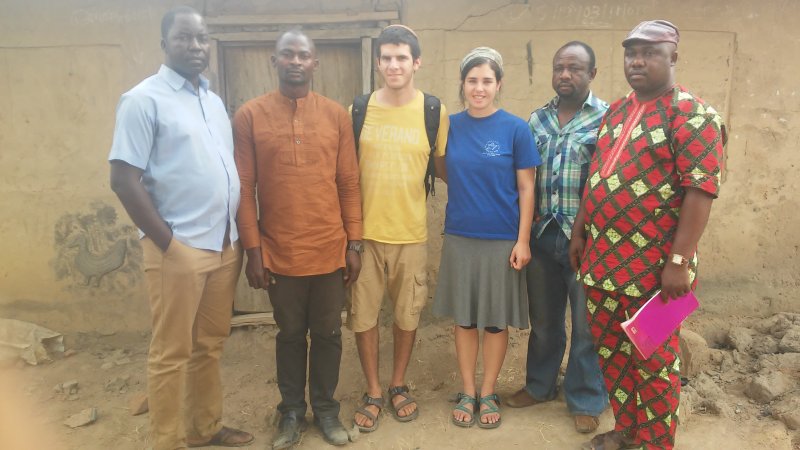
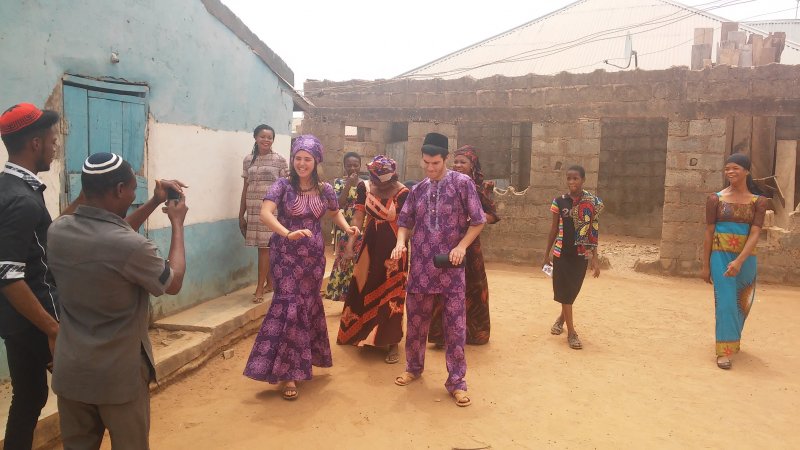
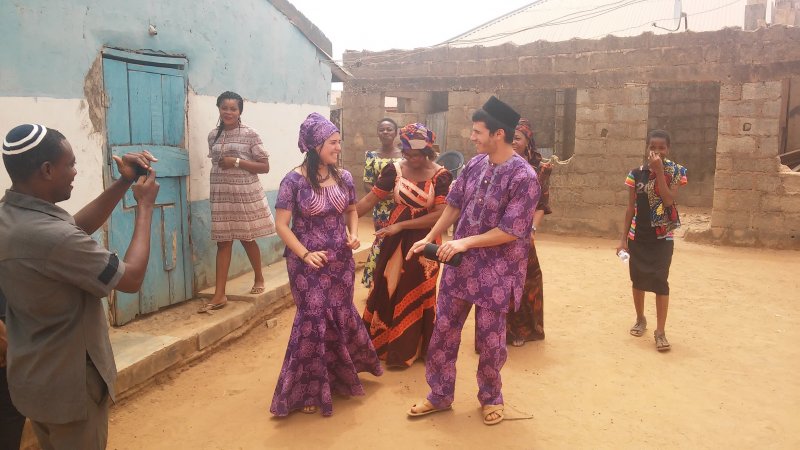
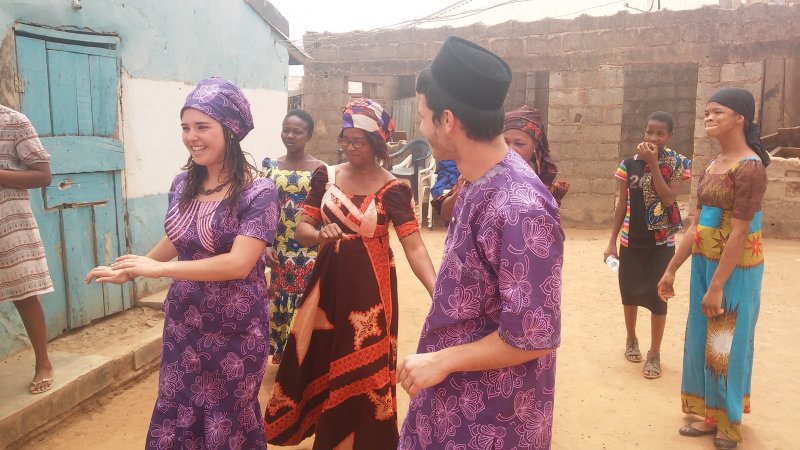
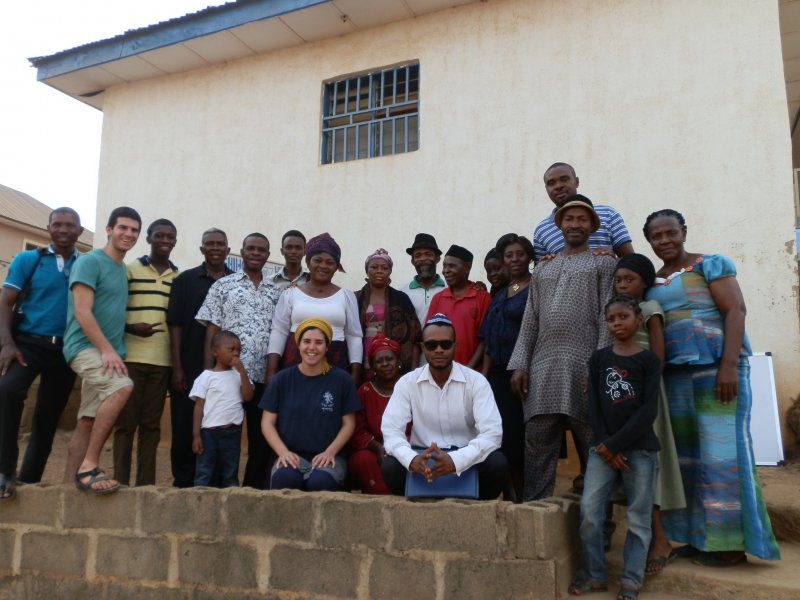
Noga Kohl knew little about Nigeria’s Jewish community – one of the most fascinating possible “lost” Jewish tribes to be found anywhere in the world – before she and her friend Michal Elroy landed at Nnamdi Azikiwe International Airport in Abuja earlier this year. They spent three weeks in Nigeria as Shavei Israel’s unofficial emissaries to the Jewish community there.
By the time Kohl left Nigeria, though, she was convinced that the history of the Igbo Jews is “a key part of the Jewish story. It’s about a people who kept much of our tradition and culture over many years, in good times and in bad. The Torah connects us to people like the Igbo Jews. The way they choose to live their lives is very similar to the way I want to live mine. We have so much in common and, after three weeks in Africa, I feel very close to them.”
What Kohl discovered in this most unlikely of Jewish communities is that, no matter how far away we might live from one another, the Jewish people is a family. Which is exactly how Kohl says she was treated from the moment she landed in Africa. Kohl told her story to Shavei Israel.
“The community leaders came to meet us at the airport and, from those first minutes that we were on the ground, they didn’t leave us, not for a minute,” Kohl recalls. “They hosted us very well and gave us a lot of respect. And I thought – who am I? I’m just a 25-year-old education student from Jerusalem. [Kohl is studying special education and art therapy at the David Yellin Academic College.] These people can teach me way more about life than I can teach them. But they saw us as teachers. They had big expectations from us.”
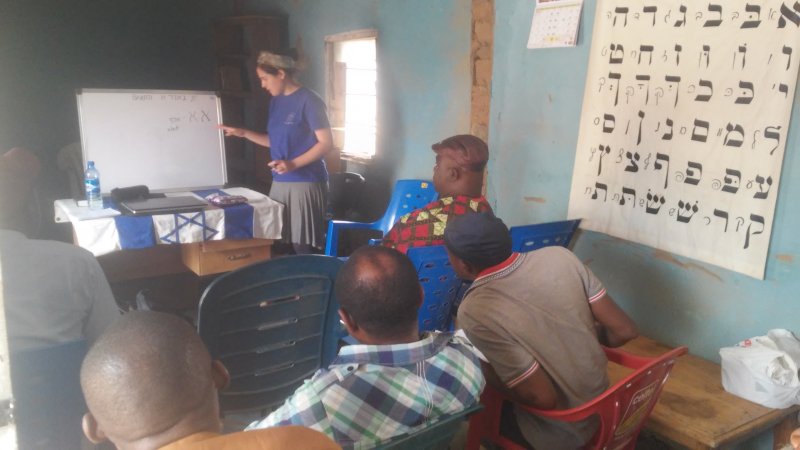
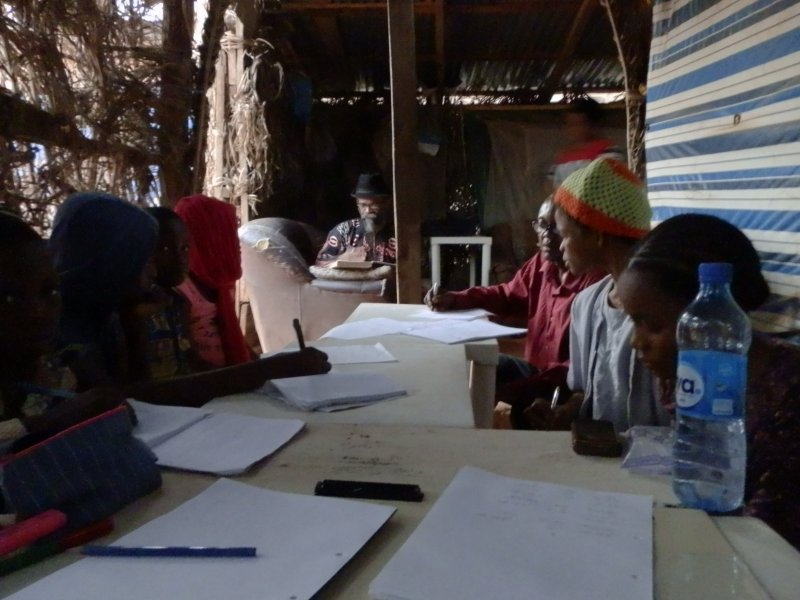
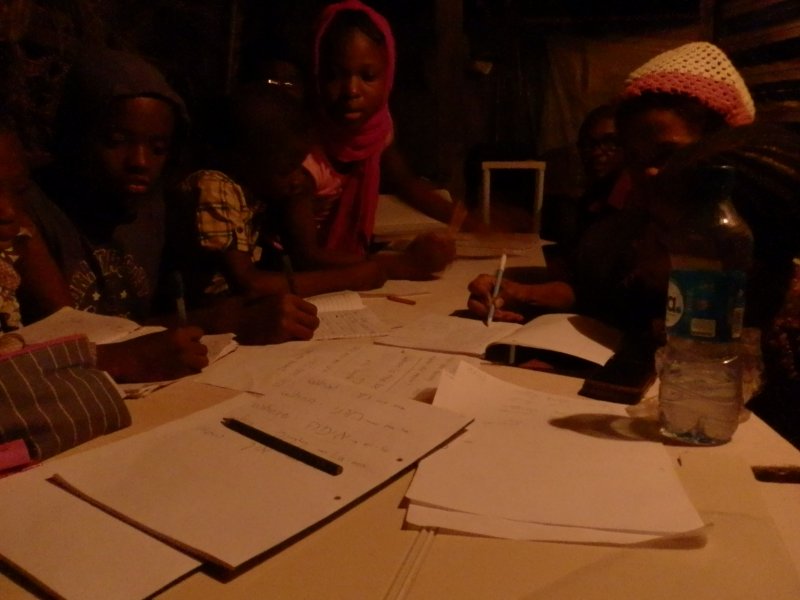
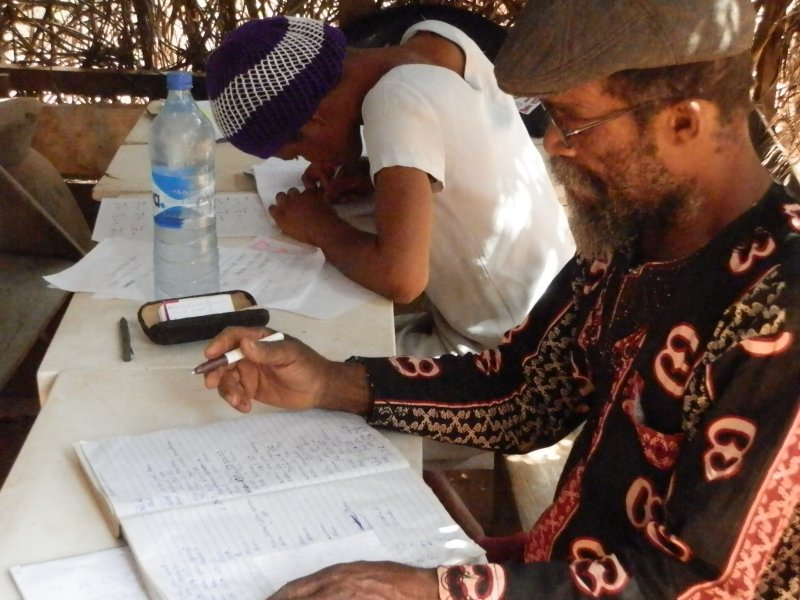
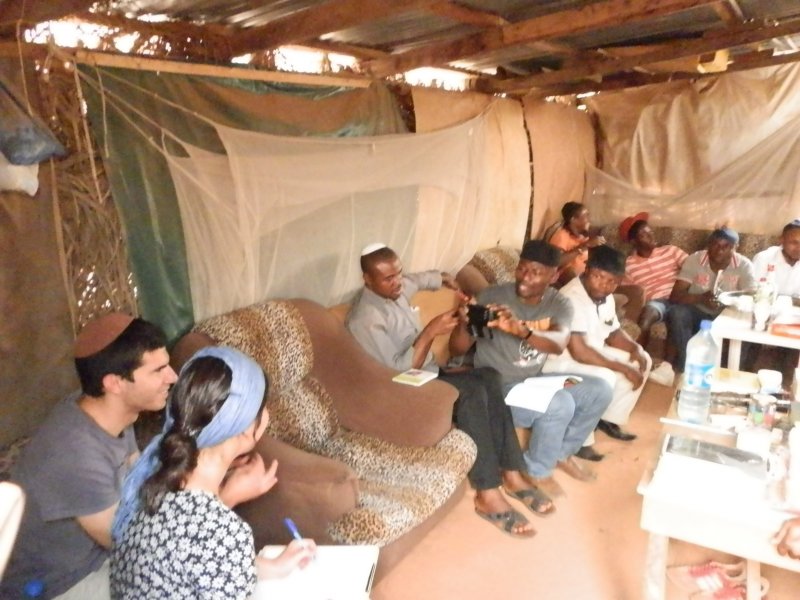
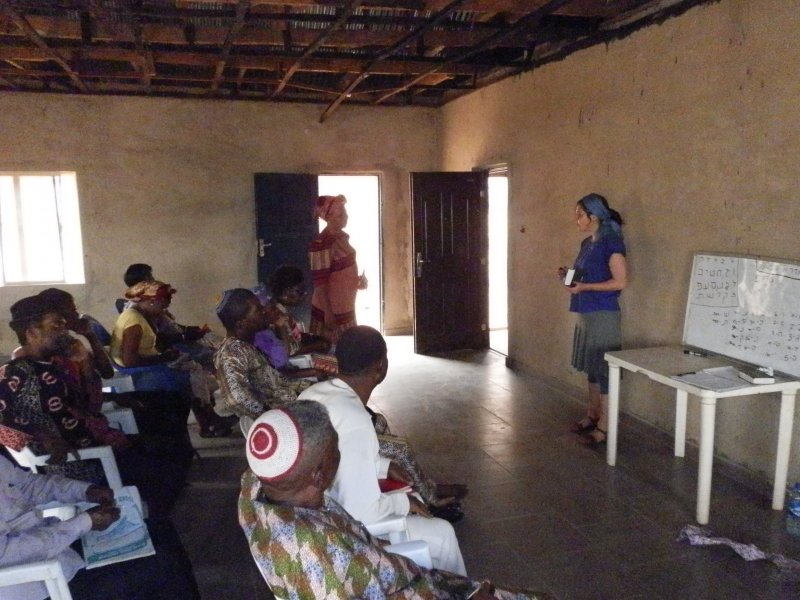
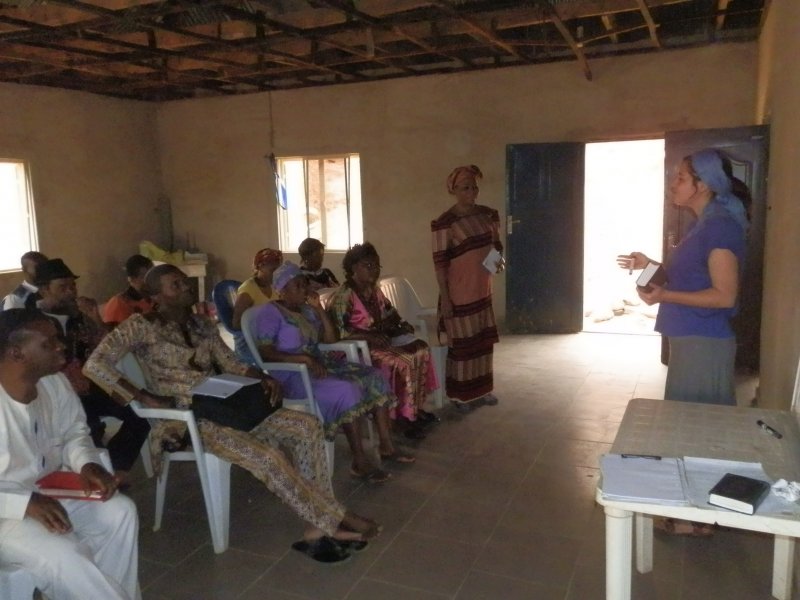
Elroy, Kohl and Kohl’s husband Gabriel – who joined the two women a week into the trip – didn’t let the community down. “We taught them Hebrew, we talked about Jewish identity and the Jewish calendar, about the Ten Lost Tribes,” Kohl says. “We gave lessons to children and adults, from the ages of 8 to 50. Whatever their age, they all have a passion to learn.”
In return, Kohl and her friends received a crash course in Igbo Jewish history.
The Igbo Jews first came to the Western world’s attention more than 500 years ago when Portuguese missionaries sailed to West Africa. They sent written reports back home about a tribe of Africans who were keeping the Jewish Sabbath and kosher laws. Most significant, though, was circumcision. With a large Muslim influence, circumcision was common among other Africans. But the Igbo were observing the tradition specifically on the eighth day, as Jewish practice stipulates.
The Igbo, the missionaries concluded, were Jewish…and they quickly proceeded to convert most of them to Christianity. But the Igbo Jews didn’t forget their roots and in the last several decades have begun reconnecting with their heritage. Rabbis and Jewish leaders began to visit them and bring more knowledge. The Igbo Jews are keeping Shabbat and kashrut again, not to mention brit mila (circumcision on the eighth day), which was observed consistently even when other practices faded away.
The Igbo Jews live mainly in Igboland, the ancestral Nigerian region of the larger Igbo people, who comprise upwards of 35 million people in this poor African nation. Igboland today is a part of the Nigerian state of Anambra. A small number of Igbo Jews live in Abuja, which is where Kohl was based.
The Igbo Jewish neighborhoods of Abuja are chaotic “with no roads, lots of cars and people in the streets,” Kohl says of her time there. “It’s a big mess compared to what we’re used to in Israel.”
Kohl and her companions were hosted in local Igbo Jewish community member homes in Abuja. (Elroy spent most of her time in Lagos.) Every morning they were driven to a different neighborhood where they would teach. (The Igbo Jews of Abuja are not concentrated in a single area.) Their Igbo hosts would make them meals – but not the local dishes.
“They had hosted non-African guests before, so they knew we’re not used to eating their food which is very spicy. So they tried to give us more rice and spaghetti.” Nevertheless, Kohl insisted on trying what her hosts were eating. “They use a lot of nuts, corn and yams. Plus delicious tropical fruit.”
The food sharing went both ways: Kohl taught the local women how to bake challah for Shabbat. It was a new experience for them, Kohl says. “They hardly eat any bread. And they don’t have ovens. So we had to make the challah inside these big pots that they put directly on top of an open fire.”
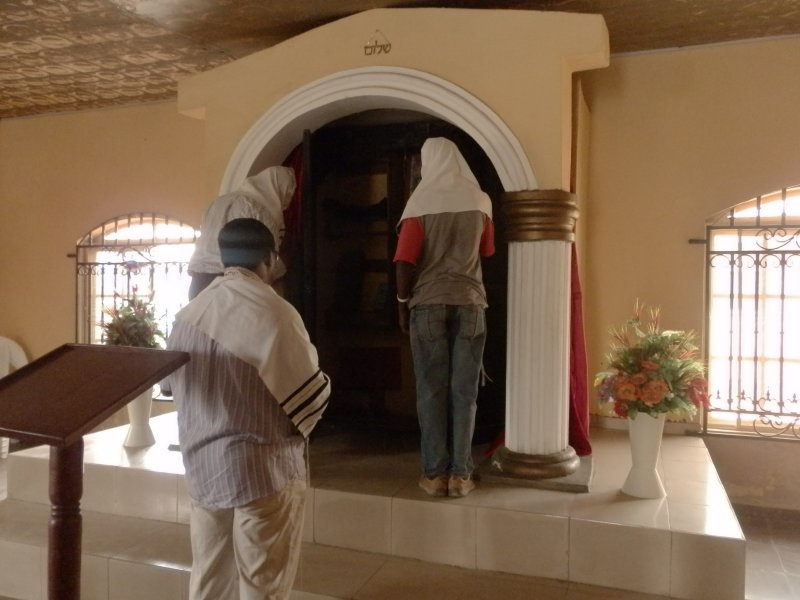
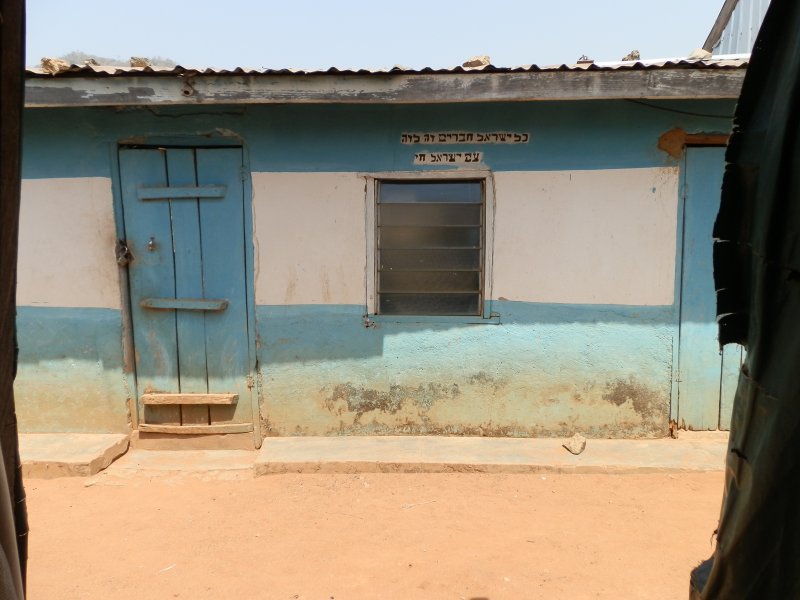
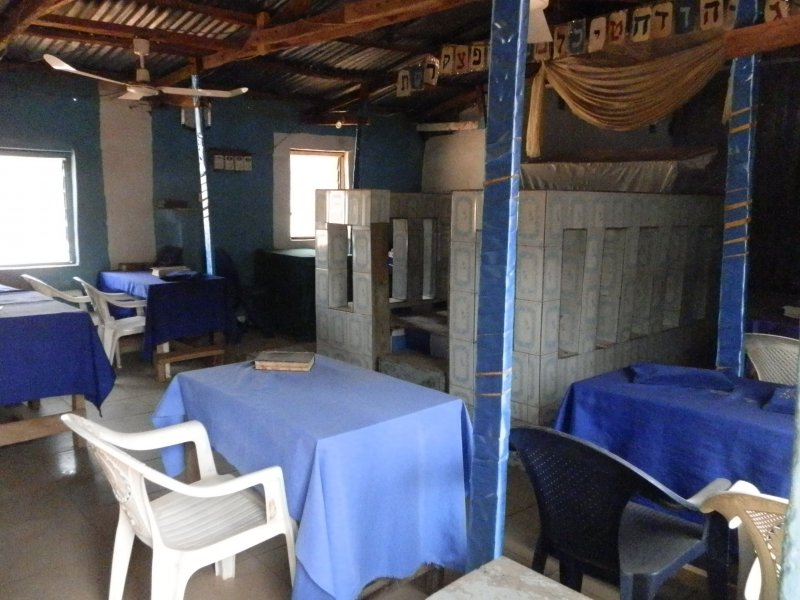
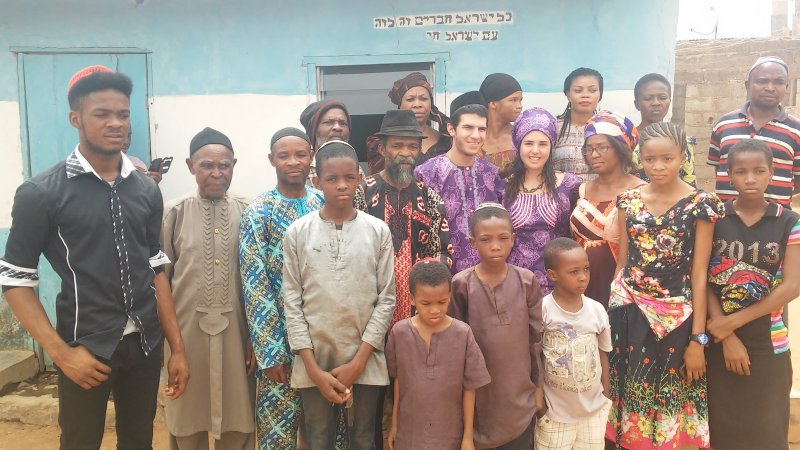
Shabbat in Nigeria is as unique as the challah. The Igbo Jews have 26 synagogues across the country, including three in Abuja. “The Shabbat morning service can take up to five hours,” Kohl says. “First of all, they call every man up to the Torah for an aliyah. And the chazzan [the Cantor] chants out every word in Hebrew.” Most of the Igbo Jews don’t understand Hebrew, but they still listen intently to every word. “They are all very into it,” Kohl adds.
The community also likes to sing on Shabbat. “The service is a mix and match of different tunes, some they heard from people who came to visit, others from the Internet, and a lot they developed and created on their own,” Kohl says. “Many of them have beautiful voices. You can really hear the harmonies. They have so much happiness – you see it in how they sing and how they move.”
The Igbo Jews are strict vegetarians. “They used to eat meat,” Kohl explains, “but once they learned the laws for making meat kosher and they realized they didn’t have a shochet (a ritual slaughterer), they stopped.” One project Shavei Israel is considering involves bringing a few people from the Igbo Jewish community to Israel for training in how to properly prepare kosher meat.
Kohl and her friends didn’t have much time to tour the country (their hosts didn’t want to them to venture outside alone – “too dangerous,” Kohl says), but they did manage to do a brief trek up a nearby mountain and they visited an indoor market. “It was very hard to see for someone coming from the west. Plus I’m a vegetarian and I keep kosher. It was very hot and there were so many flies and smells,” Kohl says.
Kohl grew up in a non-religious home in the Jerusalem suburb of Givat Ze’ev. She began her own journey towards observance while working as a counselor at Mechinat Nachshon (a pre-army preparatory program) in the Israeli city of Sderot, “We would talk a lot about identity and what it means to be Jewish,” she says.
One of the managers of the mechina was Dani Limor, who had been visiting the Igbo Jews for several years already. (It was Limor who connected Shavei Israel with the community.) After Shavei Israel’s first emissary to the Igbo Jews returned to Israel, Limor asked Kohl if she’d be interested in following up. “We weren’t clear at first what we were going to do in Nigeria,” Kohl says. “So we decided to go, to meet the people and only then decide what is the best way to proceed.”
The Igbo Jews have “a thirst for knowledge,” Limor tells Shavei Israel. “They are well educated and many are studying in university. Most important for them is learning and acting on the rabbinic traditions they never had.” As a possible “lost” tribe that left the Land of Israel long before the Talmud was codified, their Jewish practice has been until recently entirely biblical, based solely on the 613 commandments enumerated in the Torah.
“To Igbo Jews, the Jewish practices they have begun embracing in the past few decades are not those of a foreign religion or culture, but rather their own,” explains Shai Afsai who visited Nigeria in 2013 and reported on his trip in The Times of Israel. “They see themselves as ba’ale teshuvah: Jews returning to Judaism and to the traditional observances of their ancestors, which were lost due to the Igbos’ long exile from the Land of Israel and due to the introduction of Christianity to Igboland.”
The Igbo Jews are not thinking about aliyah – immigration to Israel – at least not yet. But Kohl says her identity as an Israeli in Nigeria was crucial. “My grandparents came to Israel from Russia and Poland and from Libya and Tunisia,” she says. “Having our own country is something that’s unique in Jewish history. I feel it’s our duty to keep in touch with people like the Igbo Jews. When people like them meet us, as Israelis, it becomes something very important for them – and for us.”
You can read our full history of the Igbo Jews in the Other Communities section of our website and in this profile of Shavei Israel’s previous emissary to Nigeria, Gadi Bentley.
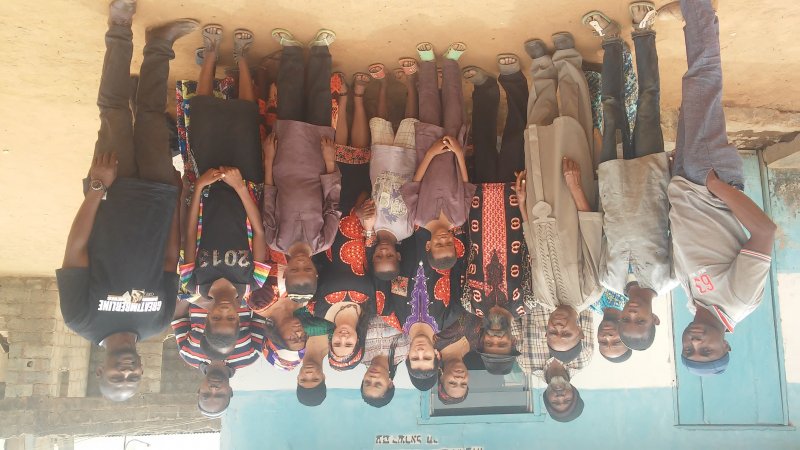
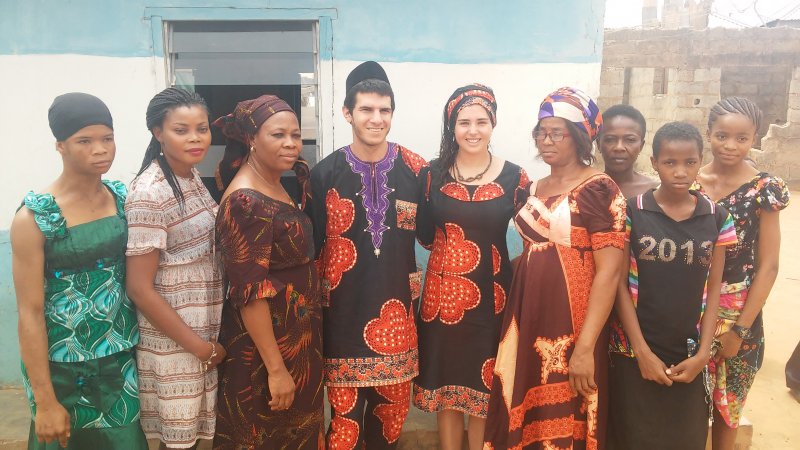
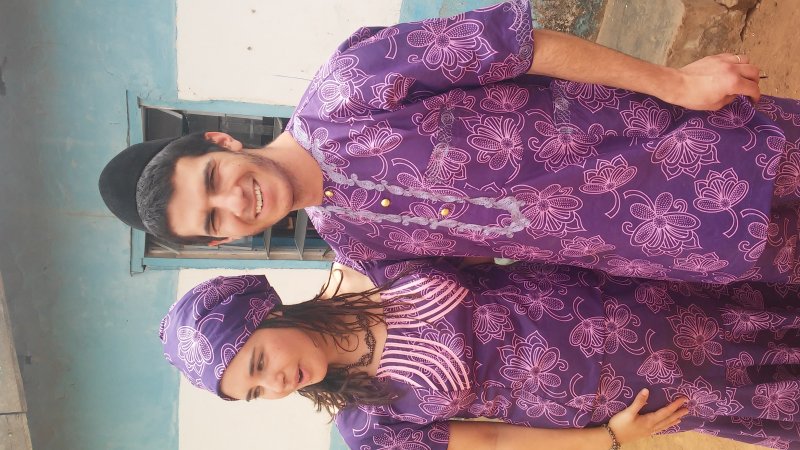
We have more pictures of Noga, Michal and Gabriel’s visit to Nigeria below. And you can find some of Gadi’s pictures here.