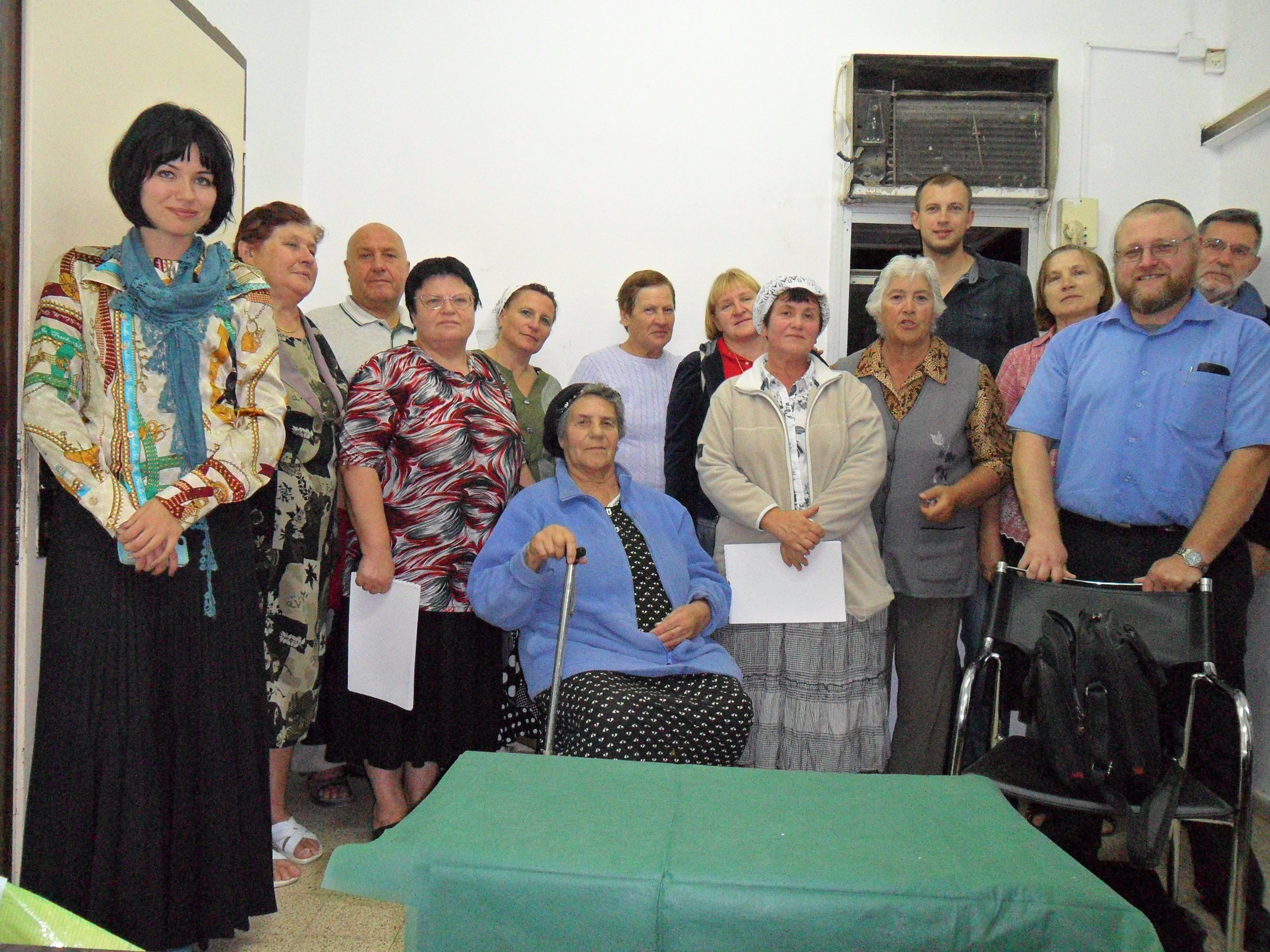
Vysoky’s Subbotnik Jews to get first synagogue in nearly 100 years

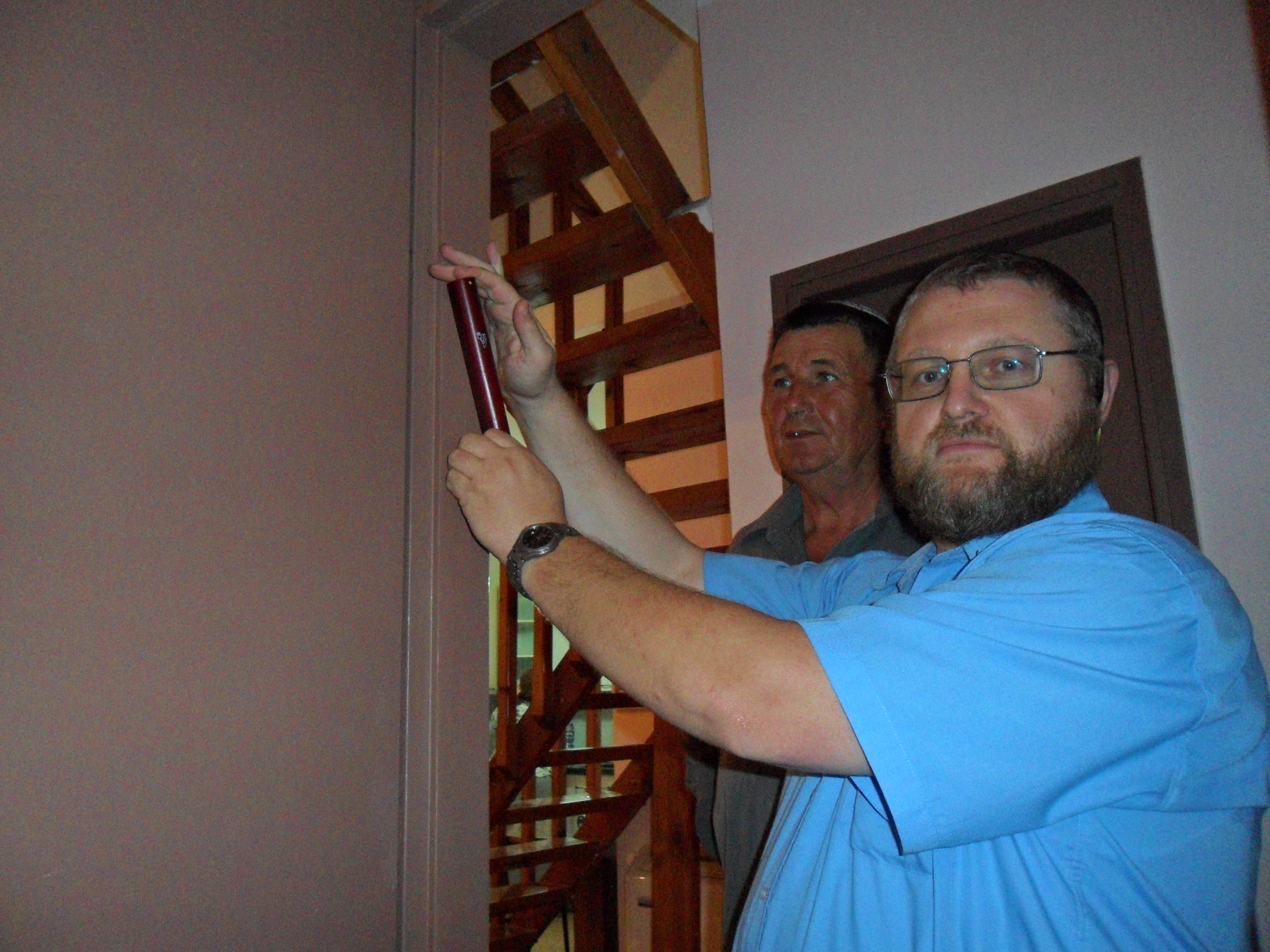
Rabbi Avrasin gets to work on the new synagogue in Vysoky
The Subbotnik Jewish community in Vysoky, Russia, is getting its first new synagogue in nearly 100 years. Together with the Russian Jewish Congress and the Jewish Community of Voronezh, Shavei Israel earlier this year purchased an old private home in the center of the village to remodel as a center for study and worship. The home had not been in use for many years, reports Shavei Israel’s coordinator for Subbotnik Jews, Esther Surikova.
The new Vysoky synagogue is expected to be used by hundreds of Subbotnik Jews on a regular basis, according to Surikova. The community has until now met in individual members’ homes. Vysoky has a population of about 1,000, about half of whom are Jews. Fifteen children already attend Sunday classes.
Vysoky is a town in southern Russia where, some 200 years ago in the early 19th century, under the rule of Czar Alexander I, thousands of mostly Russian peasants converted to Judaism. Many studied in some of the great yeshivas of Lithuania, while thousands more immigrated to Israel during the “2nd Aliyah” in the early 1900s. The name “Subbotnik” comes from their love of the “Subbota,” Russian for Sabbath.
Vysoky had a synagogue until the 1930s. Today, the closest shul is in Voronezh and it is used by Jews of all backgrounds. The synagogue in Vysoky will be exclusively for the Subbotnik Jews.
Shavei Israel’s emissary to the Subbotnik Jews, Rabbi Zelig Avrasin, has put together an ambitious proposal for local programming in the synagogue-to-be. In addition to the already running Sunday classes, Rabbi Avrasin is mulling options to create a film club and to open a “Museum of the Subbotnik Jewish Community” in the building.
Beyond the building itself, Rabbi Avrasin hopes to construct a mikveh on the property grounds that will, in addition to ritual purposes, be used as a banya – the Russian equivalent of a communal sauna. In order to provide kosher meat for the community, Rabbi Avrasin plans to reserve additional outdoor space to conduct shechita – ritual slaughter.

Synagogue blueprint
The building, which consists of five rooms, is 150 square meters in size and sits on a 1,500 square meter plot of land. The largest space will be used for prayer and study; the other rooms will become the rabbi’s office and bedroom, a kitchen and bathrooms. A blueprint of the proposed floor plan, which spells out more details, is to the left.
One of the key people involved in construction of the new synagogue space in Vysoky is Alexander Gridnev, an Israeli citizen who lives in the village and serves as gabbai, running the synagogue services when it meets in people’s homes. Gridnev has worked hard to put together a plan for the gas, electricity and water system. A Torah scroll has already been ordered from Moscow. “The only barrier to progress is raising the necessary funds,” Surikova tells us.
The purchase of the building (it cost $30,000) has already been taken care of, but that’s just the start. Repairs to convert it into a working shul are estimated at another $60,000. While renovation has already begun, it is for now being covered by the local Jewish community in Voronezh, plus some small donations from the Subbotnik Jewish community in Beit Shemesh (see our report here).
We need your help to finish this important cultural and spiritual center. The aim is to have the synagogue open by the Jewish holiday of Tu B’Shvat which this year falls on January 15, 2014 – just a few months from now.
Please consider making a donation to the first Subbotnik synagogue “Building Fund” by visiting the Support page on our website. Or contact Shavei Israel directly and we can explore naming opportunities in the redesigned building.
Here are some more pictures from the construction crew: